On this page
Car damage can begin around 1 inch
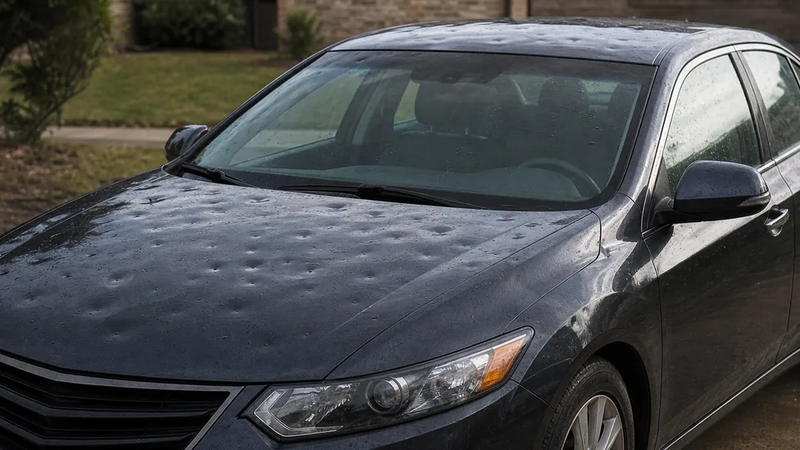
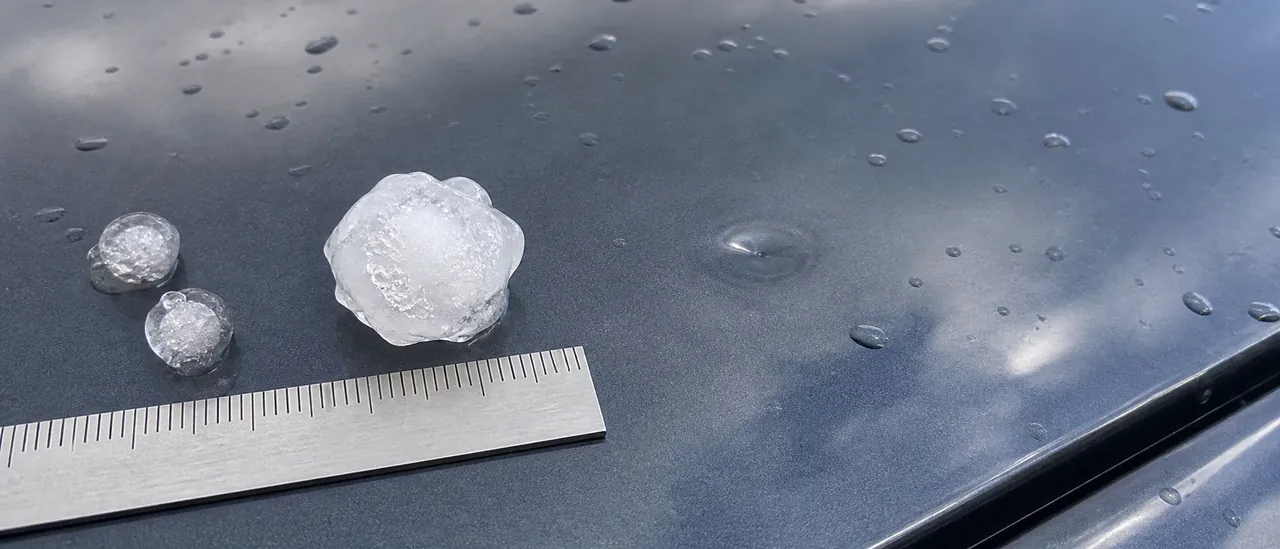
Hail about 1 inch in diameter—the size of a quarter—can dent a car. It is a practical starting threshold, not a promise that every 1-inch stone causes damage or that smaller hail never will.
The National Weather Service classifies 1-inch hail as severe and says storms producing quarter-size or larger stones can dent cars. The risk generally becomes more concerning as stones approach golf-ball size, about 1.75 inches, and beyond.
Why diameter is only the starting point
Diameter matters because a larger stone carries more mass. Speed matters too. In controlled vehicle-panel tests, 40-millimeter hail caused more damage than 20-millimeter hail at the same impact speed; hail of the same size caused more damage when its speed increased.
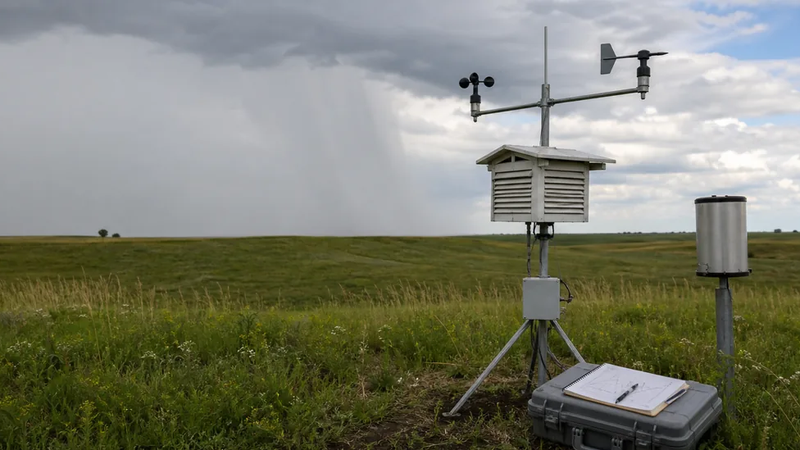
NOAA’s National Severe Storms Laboratory gives expected fall speeds of 25–40 mph for hail between 1 and 1.75 inches. Those are ranges, not fixed speeds. The laboratory notes that stone shape, melting, air resistance, and local winds all affect how fast hail reaches the ground.
Controlled tests do not create a universal field threshold. The SAE experiment used one car model, two artificial-hail diameters, and horizontally projected impacts. Those limits matter when applying its findings to other vehicles, naturally formed hail, or glass. Wind-driven hail can also arrive at an angle and strike side windows.
What changes the damage threshold
Two cars in the same storm may not show identical damage. The outcome depends on the combination of:
- hail diameter, shape, and degree of melting;
- impact speed and wind-driven angle;
- whether a stone strikes painted metal or glass; and
- the limits of any test or report being used for comparison.
That is why “1 inch” is best read as damage can happen, not damage must happen. Golf-ball-size hail presents a stronger concern, but it still does not predict the exact dents on a particular vehicle.
Radar, observed hail, and damage are different evidence
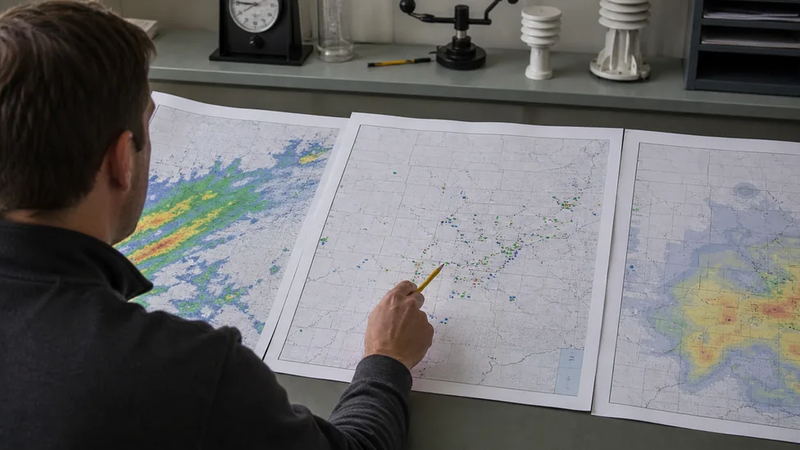
A radar-derived hail estimate describes probable storm conditions. An observed size comes from a measured or reported stone at ground level. Neither one confirms that a specific car was struck or damaged; confirmed vehicle damage requires direct evidence from the vehicle itself.
Practical bottom line
Use 1 inch in diameter as the point where car dents become a credible possibility. Expect the potential to rise with larger, harder, faster, or wind-driven hail, while remembering that no diameter creates a universal damage line.
Related reading: How Do You Measure Hail Size?